how-to-make-kombucha

Kombucha is a naturally fermented tea loved for its mildly sweet and tangy flavor, along with its many health benefits. However, many people find their homemade kombucha turns out overly sour and hard to drink. Don’t worry, with just a few simple tweaks in the recipe and fermentation time, you can easily brew smooth, refreshing homemade kombucha that’s delicious and great for your digestion. Let’s explore this easy method with Annam Gourmet!

1. What is Kombucha? Health Benefits of Kombucha

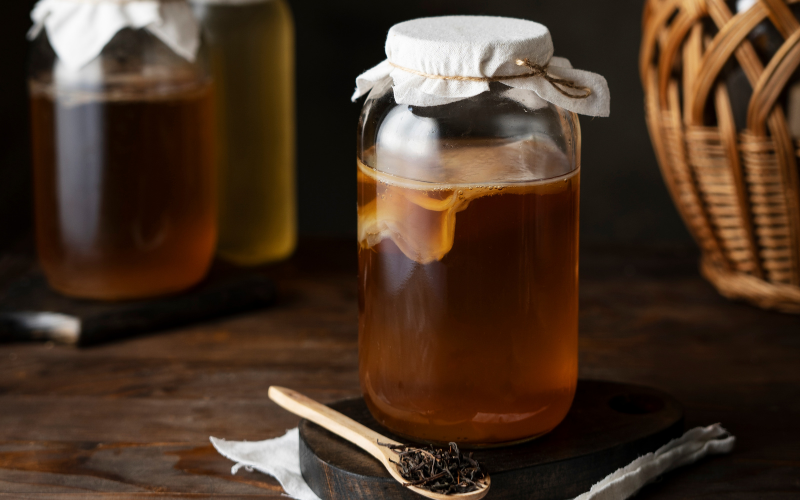
Kombucha is a naturally fermented tea made from tea (usually black or green tea), sugar, and a symbiotic culture of bacteria and yeast known as SCOBY — short for Symbiotic Culture of Bacteria and Yeast.

During the 7–14 day fermentation process, the SCOBY consumes most of the sugar in the tea, producing organic acids, enzymes, B vitamins, probiotics, and a small amount of natural carbonation. This gives kombucha its slightly sweet, tangy, and fizzy taste.

In simple terms, kombucha is a fermented tea packed with health benefits, often referred to as a probiotic drink that supports digestion, boosts immunity, and helps detoxify the body.

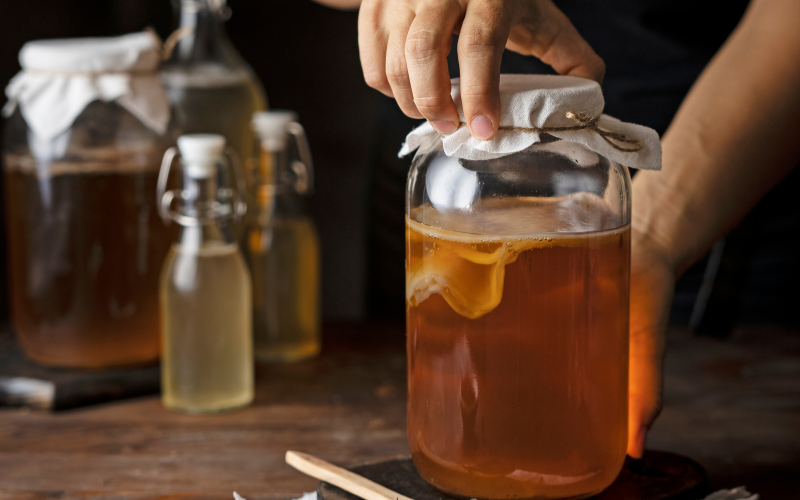
kombucha-is-a-naturally-fermented-tea-made-from-tea-sugar-and-scoby

Kombucha is a naturally fermented tea made from tea, sugar, and SCOBY

Health Benefits of Kombucha:

• Supports digestion: Rich in probiotics that balance gut microbiota, helping reduce bloating, constipation, and indigestion.

• Boosts immunity: A healthy gut and high antioxidant content help the body fight bacteria and viruses.

• Detoxifies and supports liver health: Contains glucuronic acid, which aids the liver in removing toxins and naturally cleansing the body.

• Promotes heart health: May help lower bad cholesterol (LDL), increase good cholesterol (HDL), and reduce the risk of heart disease.

• Increases energy and improves mood: Packed with B vitamins and iron, helping boost energy levels and stabilize mood.

• Provides antioxidants and supports weight management: Tea polyphenols help combat aging, boost metabolism, and assist in maintaining a healthy weight.

>> Read more: 12+ Health benefits of drinking wine

2. Ingredients needed to make kombucha at home

Tea: You can use black tea, green tea, or oolong tea. Choose pure, unscented tea without added flavors or oils, as these can affect the fermentation process.

Sugar: White cane sugar works best for kombucha brewing.

SCOBY (Symbiotic Culture of Bacteria and Yeast): The essential kombucha “starter” — a symbiotic mix of bacteria and yeast. You can buy a ready-made SCOBY or grow your own from an unpasteurized bottle of kombucha.

Starter Tea: About 200–250 ml of previously fermented kombucha (from your last batch or store-bought unpasteurized kombucha).

Water: Use clean mineral or filtered water, ideally non-carbonated.

Other Necessary Tools:

Wide-mouth glass jar (1–2 liters)

Clean thin cloth or muslin (to cover the jar)

Rubber band (to secure the cloth)

Spoon, pot, and funnel

Airtight glass bottles (for second fermentation if you want fizzy kombucha)

Avoid using plastic or metal containers, as they can negatively affect the SCOBY.

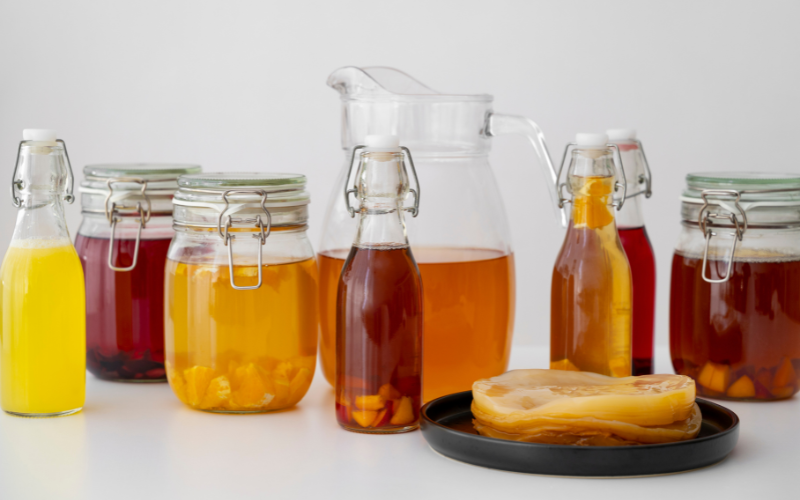
ingredients-needed-to-make-kombucha-at-home

Ingredients needed to make kombucha at home

3. How to make kombucha at home without harsh sourness

If you’ve tried making kombucha but ended up with a brew that’s too sour - almost like vinegar, it’s likely that the fermentation time was too long or the ingredient ratios weren’t balanced. In fact, creating a delicious batch of kombucha with a mild tang, natural fizz, and refreshing flavor isn’t difficult. Just follow the steps below and pay attention to a few small tips to get the perfect result.

Step 1: Prepare the tea base

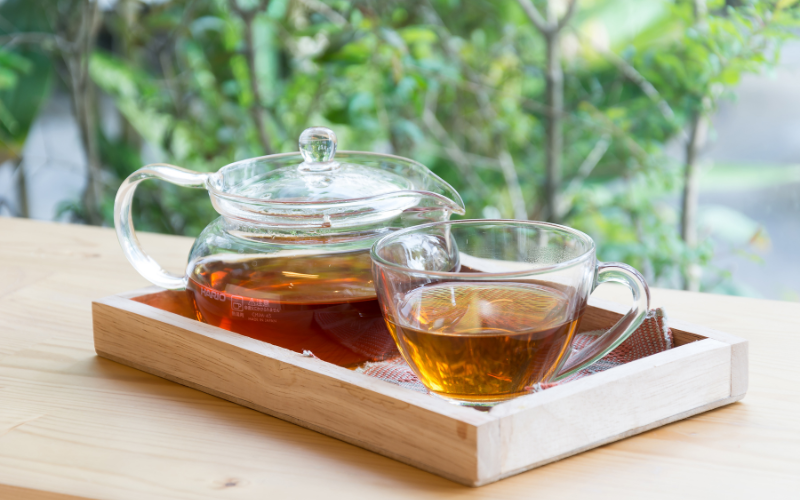
First, bring about 1 liter of water to a boil. Add 2–3 tea bags of black tea (or 1 tablespoon of loose-leaf tea). Steep the tea for about 10–15 minutes until it develops a rich color and aroma. Remove the tea bags (or strain the leaves if using loose tea).

While the tea is still hot, add 80–100 g of white cane sugar and stir until fully dissolved. The sugar not only provides sweetness but also serves as food for the SCOBY, helping it grow and ferment properly. Then, let the tea cool completely to room temperature (below 30°C) before adding the SCOBY. If the tea is still warm, the SCOBY may suffer from heat shock and get damaged.

boil-about-1-liter-of-water-then-add-2-3-bags-of-black-tea

Boil about 1 liter of water, then add 2-3 bags of black tea

Step 2: Add flavor

Pour the filtered kombucha (without the SCOBY) into airtight glass bottles, leaving about 2–3 cm of space at the top. Add your chosen fruits or flavoring ingredients, then gently stir to let the flavors blend together.

Step 3: Second fermentation

Seal the bottles tightly and leave them at room temperature for 1-3 days. During this time, a light fermentation will occur, creating natural carbonation and allowing the fruit flavors to infuse with the tea.

Check the bottles daily, if you notice gentle fizzing and a pleasant aroma, it’s ready. Once you’re satisfied with the taste, transfer the bottles to the refrigerator to stop fermentation and preserve the carbonation.

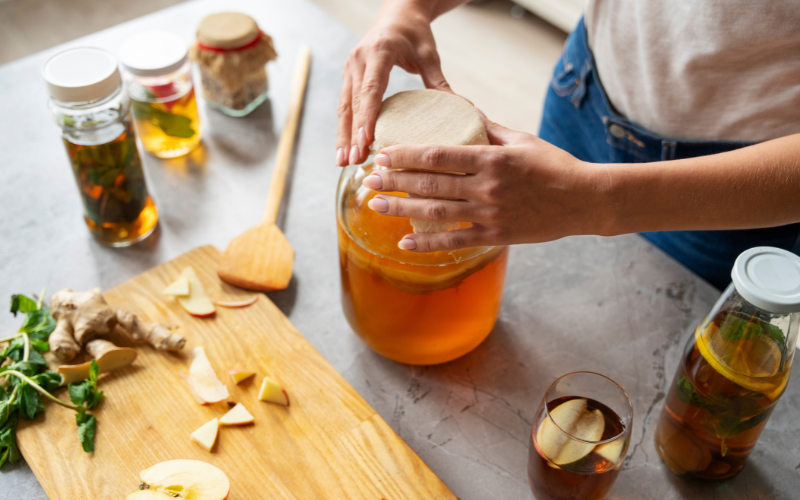
place-the-bottles-in-a-cool-well-ventilated-area-away-from-direct-sunlight-and-with-a-stable-temperature

Place the bottles in a cool, well-ventilated area, away from direct sunlight and with a stable temperature

Step 4: Second fermentation (optional – for natural carbonation)

If you want your kombucha to have a light aroma and natural fizz like soda, try this step. Pour the filtered kombucha (without the SCOBY) into airtight glass bottles. You can add fruits or herbs of your choice, such as:

A few slices of ginger or lemongrass for a refreshing taste.

Some strawberries, apple slices, or cinnamon for a pleasant fruity flavor.

Then, seal the bottles tightly and let them sit at room temperature for 1–3 days. During this time, the kombucha will undergo light fermentation, producing natural CO₂ that creates gentle carbonation. Once it reaches your preferred level of fizziness, transfer the bottles to the refrigerator to stop the fermentation process.

4. How to make fruit-flavored kombucha

After completing the first fermentation (when the kombucha tastes lightly tangy, refreshing, and not overly sweet), it’s time for the second fermentation — the step that adds fruit flavor and natural carbonation. This is the “heart” of the process that makes your kombucha more delicious and enjoyable to drink.

Step 1: Prepare the ingredients

You can use fresh fruits, fruit juice, or dried herbs depending on your taste. Below are some easy and popular flavor combinations:

• Lemon syrup: Refreshing and cooling, perfect for hot days.

• Strawberry and mint: Lightly fragrant, easy to drink, with a soda-like fizz.

• Apple and cinnamon: Mildly sweet and warm - best served chilled.

• Orange and passion fruit: A balanced sweet-tart flavor rich in vitamin C.

• Ginger and honey: Adds warmth and boosts immunity.

For each bottle of kombucha (about 300-500 ml), add only 1-2 tablespoons of chopped fruit or fresh juice. Avoid adding too much, as excessive sugar from the fruit can cause over-fermentation or overflow during carbonation.

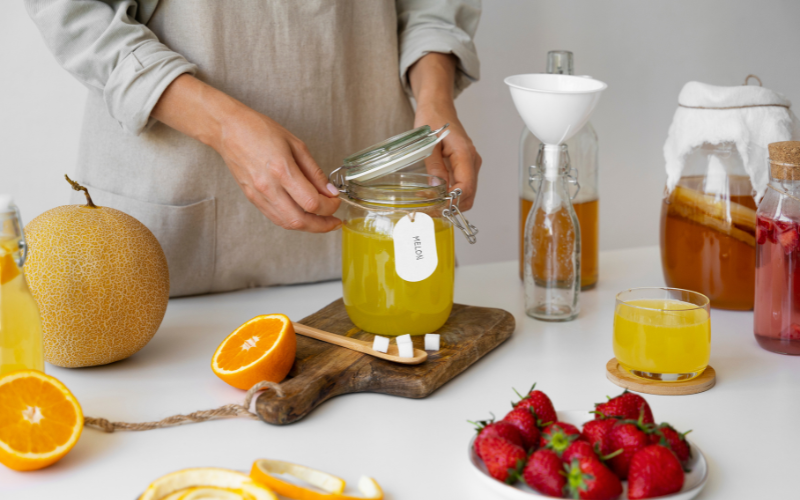
prepare-the-ingredients

Prepare the ingredients

Step 2: Add flavor

Pour the filtered kombucha (without the SCOBY) into airtight glass bottles, leaving about 2–3 cm of space at the top. Add your chosen fruits or flavor ingredients, then gently stir to let the flavors blend evenly.

Step 3: Second fermentation

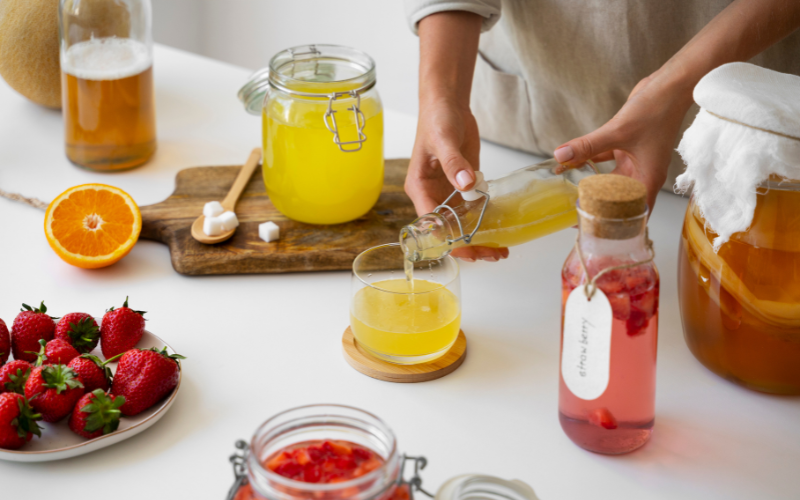
Seal the bottles tightly and leave them at room temperature for 1–3 days. During this time, a light fermentation will occur, creating natural carbonation and allowing the fruit flavors to infuse with the tea.

Check the bottles daily - if you notice gentle fizzing and a pleasant fruity aroma, it’s ready. Once you’re satisfied with the flavor, transfer the bottles to the refrigerator to stop fermentation and preserve the carbonation.

seal-the-bottles-tightly-and-let-them-sit-at-room-temperature-for-1-3-days

Seal the bottles tightly and let them sit at room temperature for 1–3 days

Step 4: Enjoy

After chilling for at least 12 hours, slowly open the bottle (as kombucha contains natural carbonation) and enjoy. Fruit-flavored kombucha is best consumed within 1–2 weeks to maintain its freshest taste and aroma.

>> Read more: How much water should you drink in a day?

5. Important notes on growing SCOBY and storing kombucha

Once you’ve mastered the basic brewing process, it’s crucial to pay attention to how you care for your SCOBY and store your kombucha, these steps determine whether your brew turns out safe and flavorful.

5.1 Maintain strict hygiene in every step

During fermentation, the kombucha environment is highly sensitive to contamination. To keep it safe and healthy:

Wash your hands thoroughly before touching the SCOBY.

Rinse jars, funnels, and spoons with hot water or white vinegar.

• Avoid using any metal utensils, especially aluminum or copper, as they can react with the acids in kombucha and damage the SCOBY.

Do not use scented soaps — leftover chemicals can kill beneficial microorganisms.

Keeping your equipment and workspace clean ensures a healthy SCOBY and gives your kombucha a smooth, pleasant flavor without bitterness or harsh acidity.

5.2 Choose a suitable environment for your SCOBY

Your SCOBY needs a stable environment to grow properly. You should place the kombucha jar in a location that is:

Cool and well-ventilated, away from direct sunlight, ideally between 25–30°C.

Free from vibration or frequent movement, as this can disrupt the formation of new SCOBY layers.

Covered with a thin cloth or muslin secured with a rubber band to allow airflow while keeping out dust and insects.

If the weather is too cold, wrap the jar with a towel to maintain a steady temperature for healthy fermentation.

choose-a-stuitable-enviroment-for-your-scoby

Choose a suitable environment for your SCOBY

5.3 How to care for your SCOBY when not in use

If you’re not brewing kombucha regularly, you need to store your SCOBY properly to keep it alive and healthy:

Place the SCOBY in a clean glass jar and pour in enough old kombucha (starter tea) to fully cover it.

Cover the jar with a thin cloth and keep it at room temperature in a cool, shaded place away from direct sunlight.

If you’re pausing for more than 3–4 weeks, you can store it in the refrigerator. Before using it again, leave it at room temperature for 1–2 days to “wake up” the yeast and bacteria.

5.4 How to identify a healthy vs. spoiled SCOBY

A healthy SCOBY usually:

Has a light cream to pale brown color, with a smooth and slightly slippery texture.

May float or sink in the jar — both are completely normal.

Smells mildly like apple cider vinegar, clean and pleasant.

A spoiled SCOBY often:

Shows mold growth in green, black, or powdery white spots.

Has a strong, unpleasant odor that’s sour or rotten.

In this case, you’ll need to discard the entire batch of kombucha and start over with a new SCOBY. If you’re a beginner, it’s a good idea to keep a backup SCOBY in a separate jar to avoid losing your “mother” completely in case something goes wrong.

a-healthy-scoby-usually-has-a-light-cream-to-pale-brown-color

A healthy SCOBY usually has a light cream to pale brown color

5.5 How to store kombucha after fermentation

Once your kombucha reaches the desired tanginess and level of carbonation, you need to stop the fermentation process by refrigerating it.

Store it in airtight glass bottles - avoid using plastic bottles.

Keep it in the refrigerator for 2–4 weeks; it will maintain its fresh flavor and high probiotic content.

When opening, tilt the bottle slightly and open it slowly to prevent overflow caused by natural carbonation pressure.

6. Tips to enjoy kombucha better

To fully appreciate the refreshing taste and health benefits of kombucha, try these simple yet delicious ways to enjoy it:

• Drink it chilled in the morning or after meals: Cold kombucha helps awaken your body, gently aids digestion, and provides a refreshing boost. After meals, its natural organic acids support better nutrient absorption.

• Pair it with vegetable salads or quinoa: A perfect match for light, healthy meals. The mild tang and natural fizz of kombucha balance the richness of olive oil, nuts, or cheese in salads, making every bite more harmonious and appetizing.

• Mix it into mocktails or smoothies: Blend kombucha with fruit juices like apple, orange, or blueberry for a unique, flavorful twist. Add a few slices of lemon, ginger, or mint leaves for extra freshness.

• Serve it with ice and fresh fruits: A chilled glass of kombucha with slices of orange, strawberry, or cucumber is not only visually appealing but also enhances the natural flavor — ideal for hot days.

• Use it as a gentle detox drink: Drinking kombucha in the morning along with a diet rich in greens helps detoxify the body and reduce bloating or heaviness.

Making kombucha at home is a fun and rewarding way to care for your health while exploring the art of natural fermentation. With a bit of patience and attention, you can create smooth, mildly tangy, probiotic-rich kombucha right in your kitchen. Start today and enjoy the freshness, vitality, and well-being this special tea brings!

You can find all the essential ingredients for authentic kombucha brewing at Annam Gourmet – from tea and organic sugar to mineral water and premium fruit syrups, making it easier and more enjoyable than ever to craft your own kombucha at home.

Contact Information:

• Website: https://shop.annam-gourmet.com/

• Hotline: 1900 636431

• Email: [email protected]